
Interleaf
Sealed mail between Obsidian vaults.
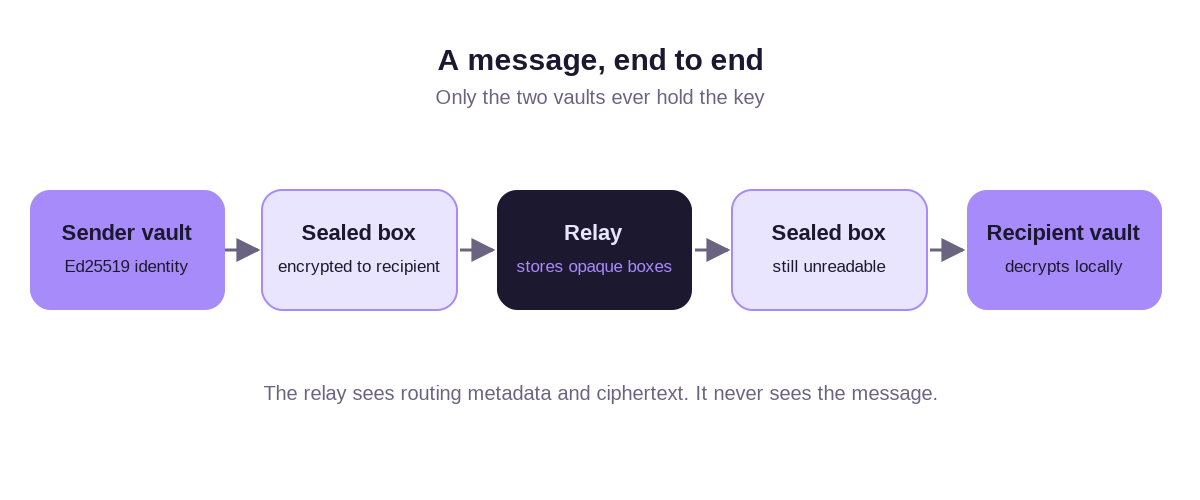
Your notes already live on your devices — your mail should too. Interleaf turns any vault into a mail endpoint: every message sealed to the recipient's key before it leaves, every signature checked against a pinned identity. Only the two vaults ever hold the key.
Verification is native. Every message carries a signature checked against a pinned key. Key changes are loud, not silent.
No accounts, no directory. First contact happens out-of-band through invite codes — the invite is the address. Strangers knock into a quarantine you review.
Relays can't read. The relay is a dumb per-fingerprint mailbox of opaque boxes. It sees routing metadata and ciphertext. That's all.
It exists — here it is running
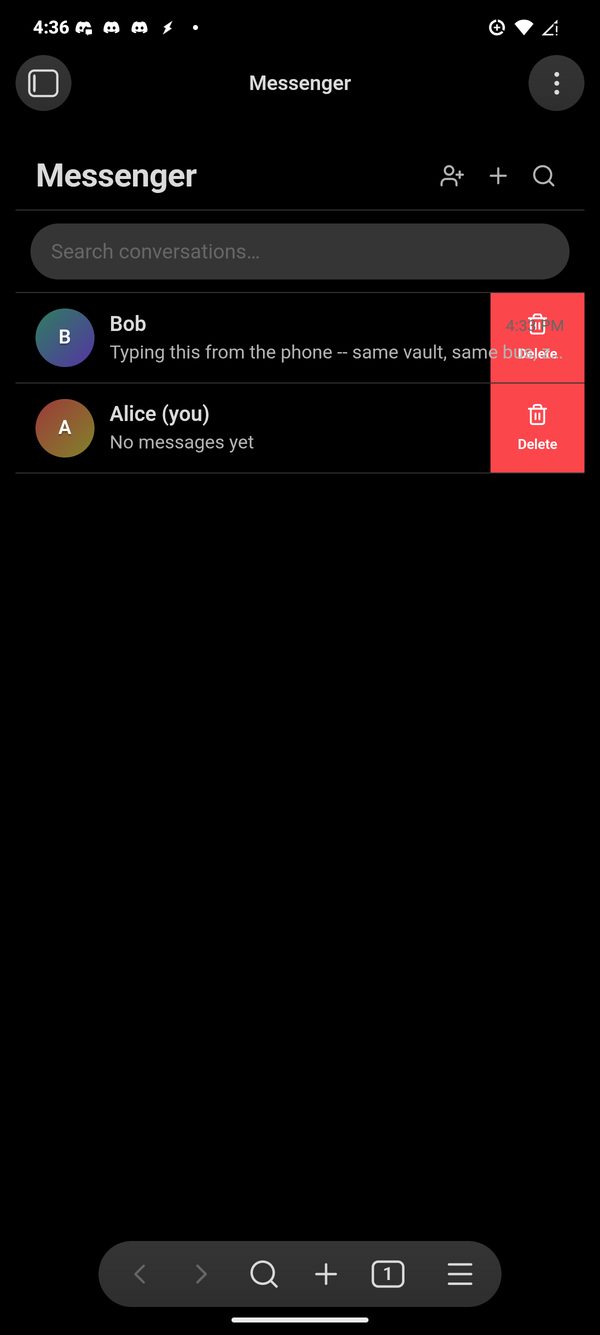
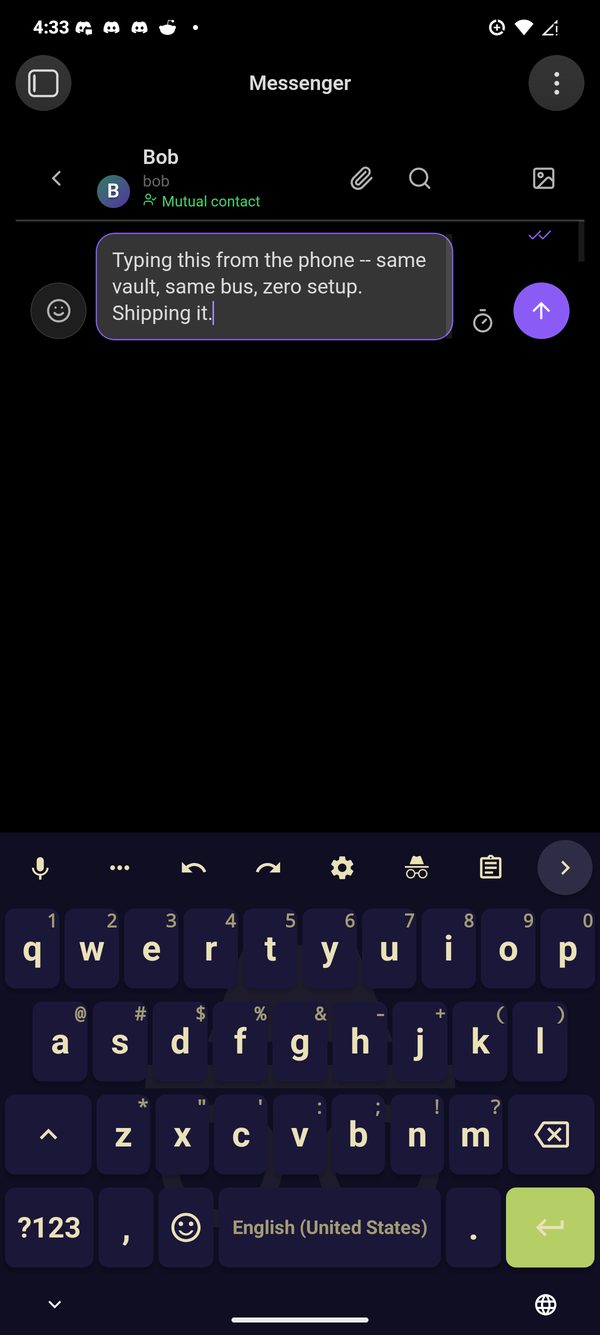
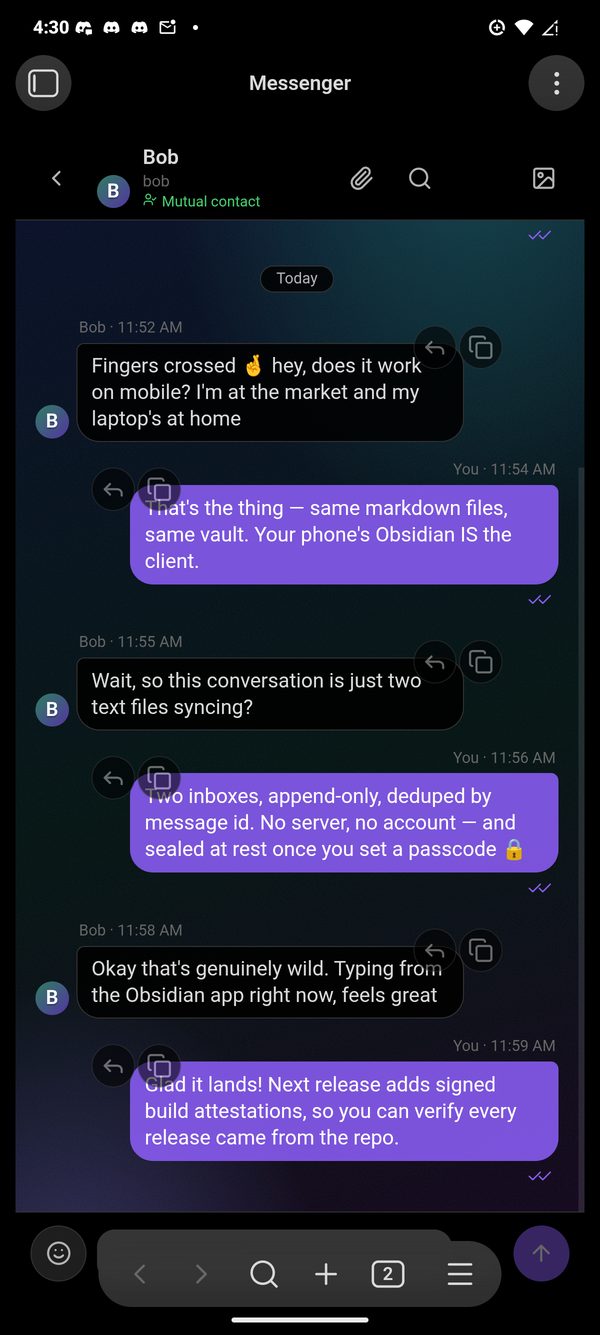
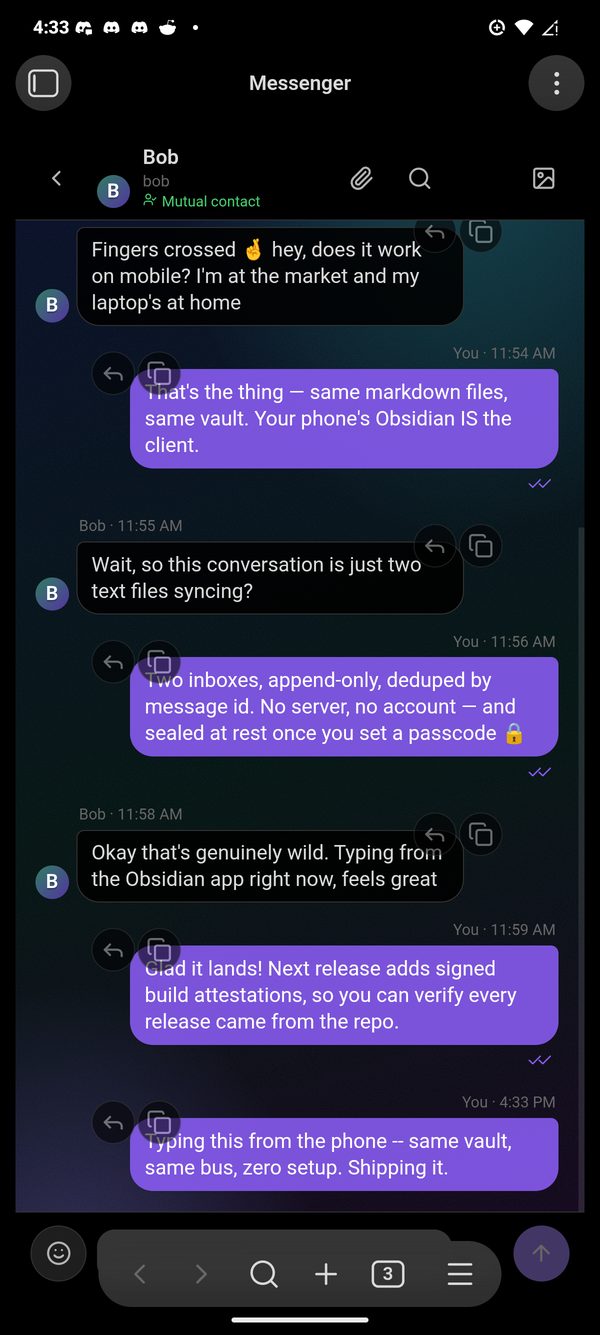
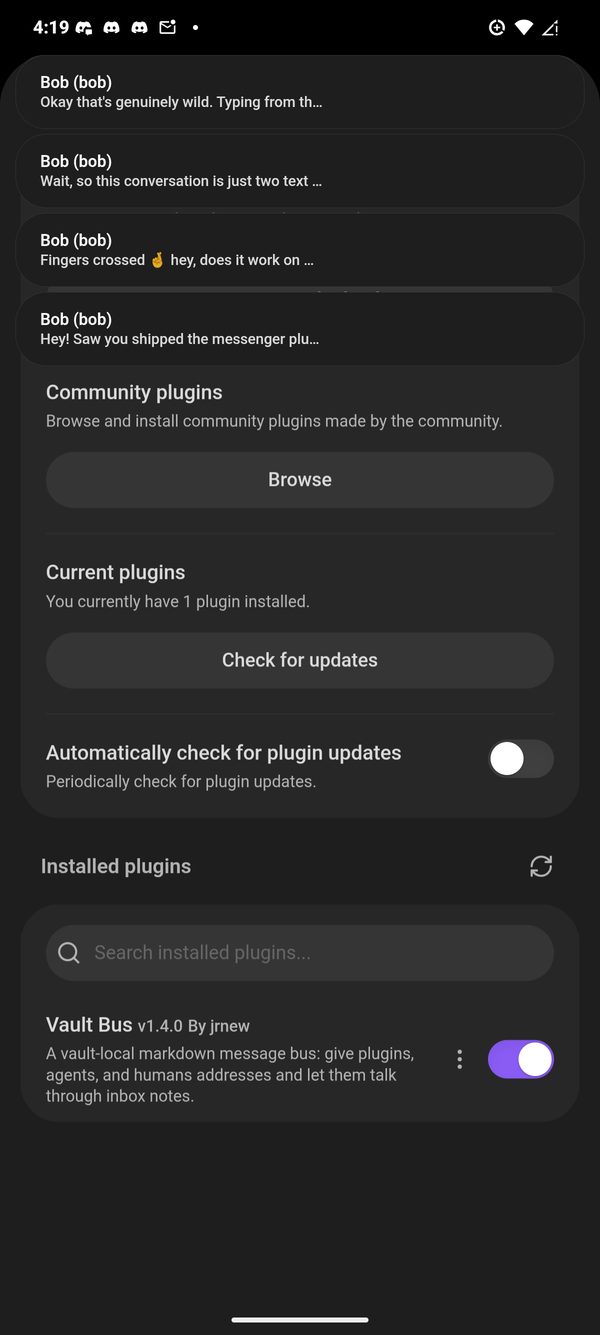
Real screenshots from a phone vault. Every conversation is human-readable markdown on disk — open the folder with any file manager and read it.
Security, concretely
Ed25519 keypair identity. Your address out there is a fingerprint; the seed is wrapped at rest and only exists in memory while unlocked.
NaCl sealed boxes. Every message signed with your key and encrypted to the recipient's before it leaves.
AES-256-GCM at rest. Message bodies sealed in the vault; Argon2id (memory-hard) wraps the vault key.
First contact is a knock. Strangers land in a quarantine you review — never straight into your inbox.
Key-change detection. A pinned contact announcing a new key is loud, not silent.
Safety numbers. Compare 30 digits out-of-band when identity matters.
Invite codes, QR, deep links. No directory to type an address into — the invite is the address.
No custom crypto. tweetnacl, @noble/hashes, and WebCrypto — all public, audited primitives.
Honest limits
- Relay metadata is stated, not solved. The relay sees destination fingerprint, size, and timing for mail in flight — and stores only opaque ciphertext.
- No ratchet, on purpose. Sealed boxes are static — no forward secrecy against a later long-term-key theft. The right bet for archival mail; Signal-style ratchets optimize a different threat.
- First contact trusts the invite. Key pinning is TOFU: an intercepted first invite could swap keys. Quarantine plus a 30-second safety-number comparison closes that window.
- Receipts never cross vaults. Remote conversations show no delivery or read receipts, by design.
- A signature proves key possession, not personhood. Compare safety numbers out-of-band when it matters.
- Relay retention is the outer bound. Mail in flight expires after 7 days; the relay must be up to receive it.
Questions, answered
What is Interleaf? End-to-end encrypted mail between Obsidian vaults, shipped as an Obsidian plugin. Messages are sealed to the recipient's key before they leave the device.
How is it different from email? Email is plaintext with encryption bolted on. Interleaf seals everything by default, has no accounts or directory, and relays store ciphertext they can't read.
Can the relay read my messages? No. It's a dumb per-fingerprint mailbox of opaque boxes — routing metadata and ciphertext, nothing else. Mail in flight expires after 7 days.
Does it need an account or server? No. Your address is your key fingerprint; first contact happens out-of-band through invite codes — the invite is the address.
Is it end-to-end encrypted? Yes. NaCl sealed boxes: signed with your Ed25519 key, encrypted to the recipient's. At rest, AES-256-GCM with the vault key wrapped by Argon2id.
Does it have forward secrecy? No ratchet, on purpose. Sealed boxes are static — a deliberate trade for archival mail, not an oversight.
Where does it run? Wherever Obsidian runs. Every conversation is human-readable markdown on disk — open the folder and read it.
Is it free? In development, licensed BUSL-1.1, converting to GPL v3. Details on the license page.